Is it too late to start strength training in your 40s, 50s or 60s?

A man in his eighties walked into our South Yarra studio for the first time in his life. He'd never set foot in a gym. He had one goal: lift his wife's suitcase into the overhead locker on their next trip, on his own, without doing his back in.
He can do that now. They still travel for months at a time.
That's a nice story. It's also the entire argument for this article — so let me make the case properly, because the version of you in thirty years is counting on the version reading this.
Is it actually worth starting this late?
Yes. It gets harder the longer you wait, but it's never too late — and the fact that it gets harder is exactly why you start now, not later.
As long as you're breathing, you can do something about it.
— Peter Attia
The research backs him. Cardiovascular fitness keeps lowering your risk of dying at every age studied — no group is ever "too far gone" to benefit.
Here's the honest part. We see our own future in our parents and grandparents. Whether you spend your last decade keeping up with grandkids or watching from a chair is not random. It's largely decided by what you do in the twenty years before it.
Attia calls that last stretch the "marginal decade." His framing is simple: pick what you want to be able to do at eighty — carry the shopping, get off the floor, lift a case overhead — and train for it now. That suitcase example? It's almost word for word the one he uses. Our member just went and did it.
What actually happens to your body after 40 if you do nothing?
It declines. Quietly, steadily, and far faster than most people are ever told — which I think is close to a cardinal sin, because it's so under-publicised and so preventable.
I'm not here to frighten you. But the facts are worth knowing. After 40, muscle mass tends to fall by somewhere between 3 and 8% per decade, and the slide speeds up after 60. Strength goes faster than size. Your VO2 max drops too.
That last one matters more than people realise. VO2 max — the best single measure of how fit you are — is one of the strongest predictors of all-cause mortality we have, ahead of smoking and diabetes in some large studies. The good news: it's highly trainable, at any age.
The part nobody mentions is what muscle loss leads to. Weaker muscle means more falls and fractures, and a fall in your seventies or eighties is often the event that quietly ends someone's independence. Knowledge is power here. None of this is fixed. All of it responds to training.
"But I can't do that much." How much do you actually need?
Less than you think. This is the single biggest thing that stops people — they read an article like this, look at someone like Attia, decide they can't possibly do all of it, and so they do nothing.
So let me take the overwhelm off the table. Here's roughly what different amounts of strength training buy you:
One session a week maintains the muscle and strength you've got. Your nervous system sharpens up early, so you'll feel stronger quickly, even if you don't see big changes in size. For a lot of busy people, "hold the line" is a genuinely good outcome.
Two sessions a week is where you start building — more muscle, more strength, better body composition. The sessions need to count, and you can't keep skipping them, but this is the sweet spot for most people we coach.
Three to four sessions optimises it. More volume, more progress, faster. Most people don't need this, and that's fine. The point is the floor is far lower than the internet implies.
You do not need the full longevity protocol. You need to start, and you need to be consistent. Everything else is a detail we handle for you.
What about cardio — isn't lifting enough?
Strength comes first, but your heart is a muscle too, and it needs work. The trick is you don't have to choose.
Muscle is, in a real sense, the organ of longevity — it drives your metabolism, protects your bones, and keeps you resilient. So we prioritise getting you strong. But we also get your heart rate up inside the gym, using smart pairings so you're working hard while you'd otherwise be resting.
If you've got the capacity for more, the best return is a mix: some easy aerobic work where you can still talk but you're sweating, plus short, sharp intervals to push your VO2 max. Even small, consistent doses move the needle. And steps across the day still count.
This is Attia's framework too — he trains four pillars: easy aerobic, peak aerobic, strength, and stability. We just meet you where you actually are, rather than where a podcast says you should be.
Isn't it dangerous to start lifting at my age?
It's more dangerous not to. But how you start is everything, and this is where most gyms get it badly wrong.
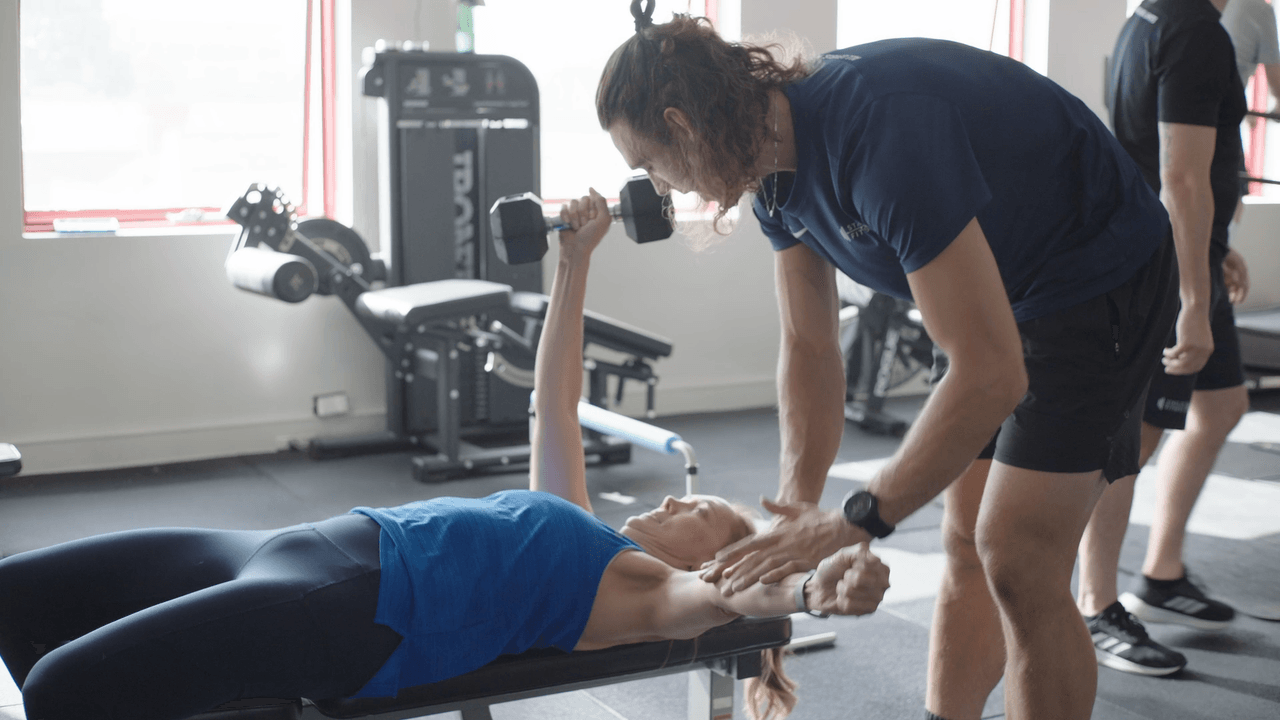
I'm a big fan of starting slow and progressing. I learned this the hard way: it's far easier to ramp up over time than to recover from doing too much, too soon. Some trainers smash a new client into the ground to prove how unfit they are. That's ego, not coaching.
Think of stress as going into a cup. Work, poor sleep, kids, training — they all pour into the same cup, and you have to recover from the lot. A good session respects what's already in there.
So we start from what I call your trainable menu: the things you can do well today, pain-free. Sore shoulder? We might start with reaching out in front and build toward overhead over weeks. Sensible sets, simpler movements first, stability before we load you up. (If you're carrying an injury or a health condition, have a quick word with your GP first — then we build around it.)
What about balance — and the fall that ends independence?
This is the one people skip, and the one that quietly matters most. The thing that ends a lot of people's independence isn't an illness. It's a fall.
Weaker muscle and poorer balance feed each other, and the fracture risk that comes with it is real — losing muscle can more than double your risk of a serious break from a fall.
What's the point of building all that strength if you can't stand on one leg or catch yourself when you stumble?
But here's the thing: I'm not going to fill your program with boring balance drills, because you came here to train, not to stand on a wobble board for an hour.
Instead we weave it in. A bit of balance and proprioception work in the warm-up to switch the system on. A stability drill slotted in as active rest while you recover between harder sets — I love pairing something demanding with something low-key like this. You barely notice it. Your nervous system does.
What about all the longevity supplements and biohacks?
They're the last 5%, not the first 95%. The wellness space is full of people selling you the sexy stuff because the boring stuff doesn't have a margin.
NMN, rapamycin, hyperbaric chambers, even creatine — some of it's genuinely interesting, and I'm not telling you to avoid it. I'm telling you it supplements the basics. It doesn't replace them. (And none of this is medical advice — anything you put in your body is a conversation for you and your doctor.)
The unsexy basics are what actually move the needle: strength training, enough protein, enough fibre, daily steps, some cardio, real sleep, daylight, and time with people you love. Do those consistently, then layer the fancy stuff on top if you want to.
Call it pay to play. I've used a sauna twice a week for seven years and not missed a week, even on holiday. But that's the icing. The cake is the basics, done over and over.
So what does a realistic week actually look like?
For most people, honestly, it's this: start, and make it regular. That's the win. The rest is optimisation.
A session with us runs 45 to 60 minutes, fully prescribed — mobility, strength, and a bit of conditioning, built for you. The goal isn't a brutal twelve-week sprint you can't sustain. It's quality training quietly embedded into your week, for good.
If you've got more capacity, a strong week might look like three strength sessions, a couple of easy cardio efforts, and some recovery. But please don't let that put you off. The bar to clear is simply: begin, and keep showing up.
Consistency is king. Think compounding interest — small, regular deposits that look like nothing for a while, then quietly add up to something you couldn't have bought any other way.
Why does where you train matter?
Because the thing actually stopping most people isn't the training. It's the environment, and whether you can trust the person in front of you. That's the real barrier, and it's the one we built the whole studio to remove.
We're the gym for people who don't much like gyms.
Our members aren't typical — they expect more, and we deliver it. There are no selfies and no string singlets. We ask questions, we don't judge, and we're genuinely curious about helping you. Professional and welcoming, not fake and intimidating.
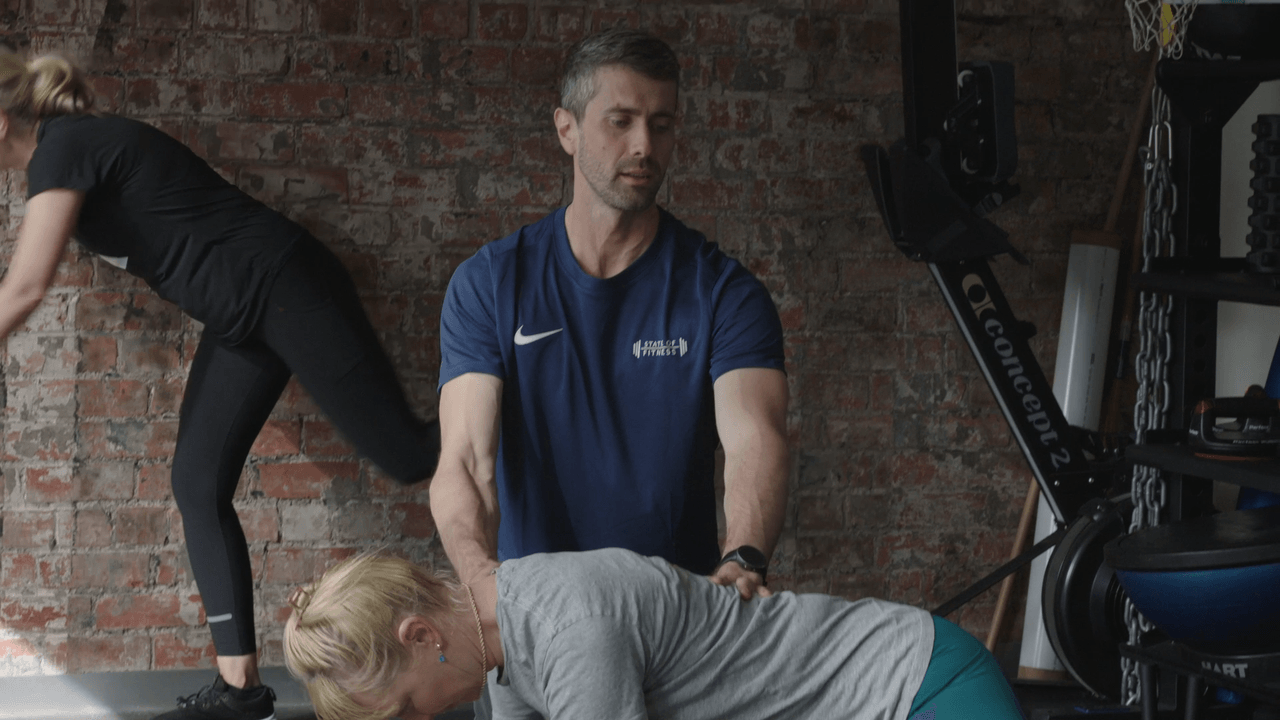
Every coach here holds a degree in exercise science — but we treat that as the floor, not the ceiling. I've been in this industry since 2009. I moved across the country from regional WA to the East Coast specifically to get at the elite coaching courses touring from the US, studied exercise science, and worked in elite sport. Our team includes a Commonwealth Games medallist and multiple-time national champion, and a coach who trained at one of the most respected performance facilities in the US.
That's rarer than it should be, in an industry full of people preaching off their own physique rather than what's between their ears. We're not the cheapest, because that experience isn't cheap. What it buys you is this: your session isn't just an hour with a trainer. It's someone who has very likely seen your exact issue before — and a whole team and network behind them if they haven't.
So where do you actually start?
You start. That's the one thing to take from all of this.
Everything above can be read two ways. You can see a mountain of things to do, decide you're not capable, and put it off another year. Or you can take the single idea that matters: get your foot in the door, and let the rest follow. The people who stall aren't the ones who do too little. They're the ones who never begin.
So cast your mind forward. Picture yourself at eighty — lifting the case into the overhead locker, getting up off the floor without a thought, keeping pace with the grandkids. That version of you is built now, in unremarkable sessions you keep showing up for.
If you want to see what that looks like in practice, our members' results tell the story better than I can.
If you'd like a hand taking the first step, that's exactly what we do. Book a free 15-minute call and we'll have an honest conversation about where you're at and whether we're the right fit. No pressure, no pitch. Or email us at info@stateoffitness.com.au.
It's not too late. It's just earlier than it'll ever be again.
Frequently asked questions
Is it too late to start strength training at 50 or 60?
No. The research is clear that strength and fitness improve at any age, and the gains matter more as you get older, not less. It gets harder the longer you wait, which is the case for starting now rather than putting it off another year.
How many times a week do I need to train to see a difference?
One session a week maintains what you've got and builds early strength. Two sessions a week is the sweet spot for most people — that's where you start building muscle and changing your body composition. Three or four optimises it, but most people don't need that much.
Is strength training safe if I have an old injury or haven't trained in years?
Yes, when it's done properly. We start from what you can do well and pain-free today, then progress slowly — it's far easier to build up than to recover from too much too soon. If you've got a health condition or injury, check with your GP first, then we coach around it.
Do I need to do cardio as well as strength training?
Strength comes first, but your heart is a muscle worth training too. We get your heart rate up inside your sessions, and if you've got capacity we'll add some easy aerobic work and short intervals. You don't have to choose between the two.
What makes State of Fitness different from a regular gym?
We're appointment-only and private, with no drop-ins and no crowds. Every coach holds a degree in exercise science, your program is built for you, and you see the same coach each session. It's a calm, professional environment for adults who'd rather not train in a typical gym.